Ordering and catalogues
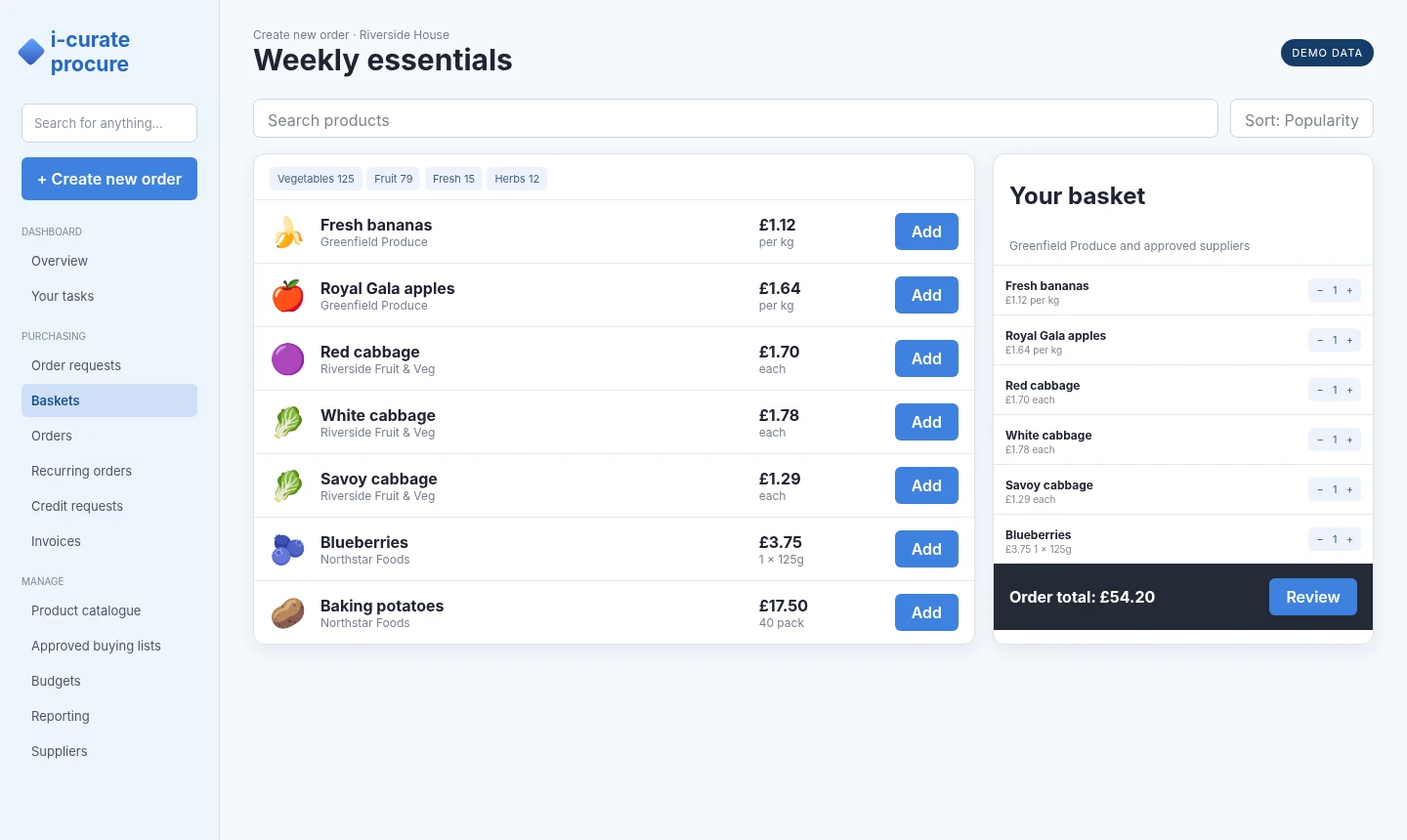
Approved products, supplier catalogues, favourites, templates and recurring baskets should make routine buying faster without hiding important product information.

Procurement systems
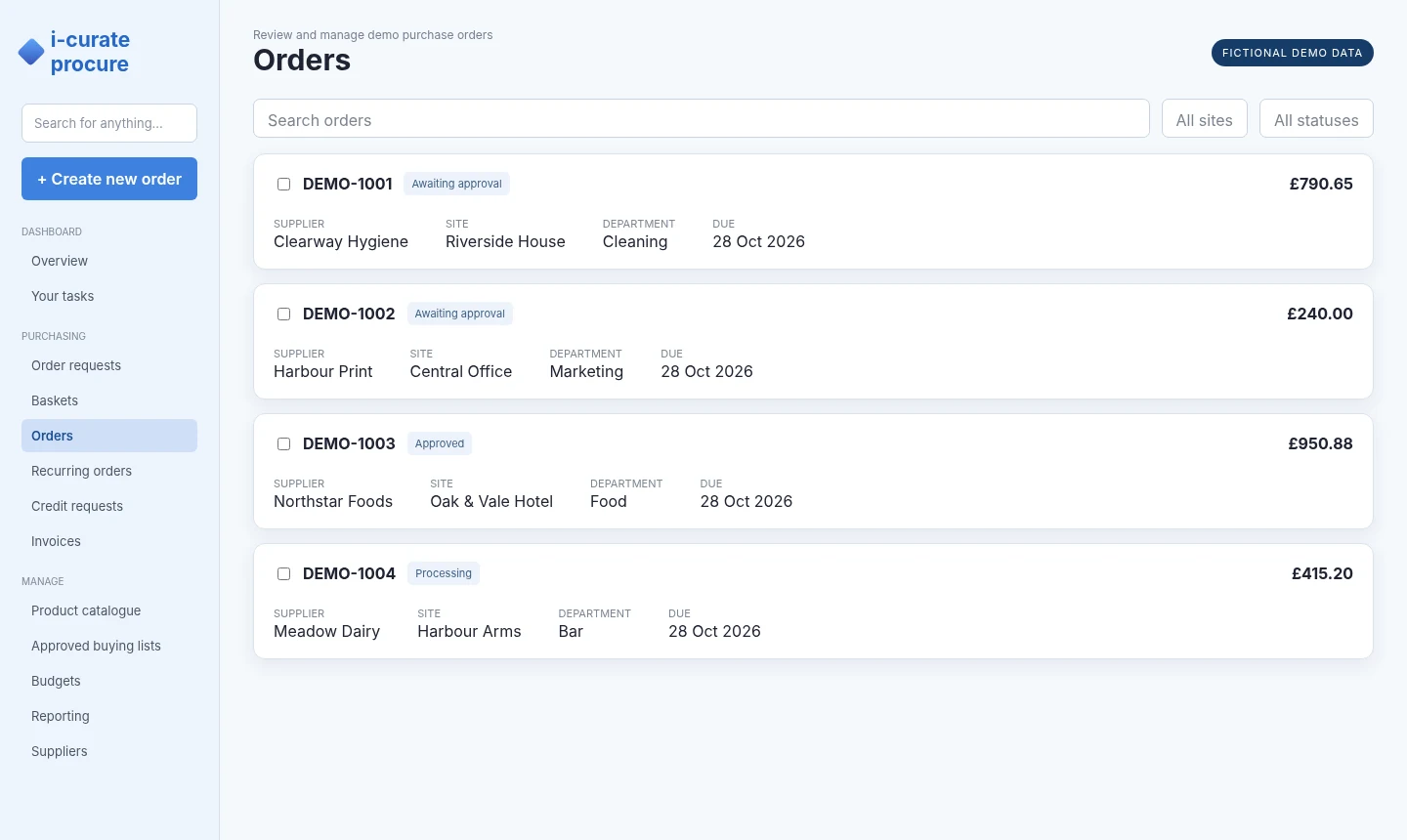
For multi-site organisations, the useful question is not how many features a platform has. It is whether people can order, approve, receive, credit, invoice, pay and report through one connected process.
What is a procurement system?
A procurement system is the operating layer that helps an organisation control what is bought, who can buy it, which suppliers can be used, how orders are approved and what happens after delivery. A strong system connects the purchase-to-pay process rather than leaving users to move between supplier websites, spreadsheets, inboxes and finance tools.
For a multi-site business, that connection matters. The site team needs a fast way to order. Finance needs a clear audit trail. Procurement needs comparable product and supplier data. Leadership needs a view across locations without asking each site to rebuild the same report.
Core capabilities
Approved products, supplier catalogues, favourites, templates and recurring baskets should make routine buying faster without hiding important product information.
Controls should reflect the way the organisation operates: by site, department, user, cost centre, category or order value.
Delivery evidence, substitutions, discrepancies and credit requests should remain linked to the original transaction.
The system should reduce manual matching and make it clear how each invoice and payment relates to the approved order.
Pricing, terms, delivery performance, product changes and issue history should be visible rather than spread across separate files.
Useful reporting highlights what needs attention early: unusual spend, price movement, overdue approvals or sites operating outside expected patterns.
Choosing a system
A supplier portal may make ordering from one supplier easier. An ERP may hold finance records. A procurement system should connect the work between the initial need and the final financial record, while integrating with the tools the organisation already relies on.
| Question | Why it matters |
|---|---|
| Can users order across multiple suppliers in one place? | Reduces separate logins and creates comparable data. |
| Can controls vary by site, role and department? | Protects governance without making every user follow the same route. |
| Are credits and amendments connected to the order? | Reduces lost evidence and invoice disputes. |
| Can the system work with existing finance processes? | Avoids creating another isolated source of truth. |
| Does implementation include real human support? | Adoption depends on people understanding the benefit and knowing where to get help. |
Common questions
Procurement software can refer to tools for sourcing, suppliers, catalogues, ordering or reporting. Purchase-to-pay software focuses on the connected operational journey from request and order through receipt, invoice and payment. i-curate combines purchase-to-pay controls with supplier management and procurement support.
Yes. The important capability is to manage each supplier through one controlled process while preserving the products and service levels that matter to each location.
Not necessarily. A procurement system manages buying activity and can pass clean information into the finance environment. The right integration depends on the organisation's existing systems and reporting needs.
Start by mapping sites, departments, suppliers, products, budgets, users and approval rules. Configure the system around the agreed process, train users and stay close through launch. The technology should fit the operating model rather than force a generic template onto it.
See the workflow